Fiber laser cutting machines have become the go-to solution for high-speed, high-precision metal cutting. Whether you're new to the technology or looking to refine your process, a proper setup can make a huge difference in both cut quality and operational efficiency. In this article, we’ll walk you through the essential aspects of setting up and using a fiber laser cutting machine.
1. Start with the Right Drawing File
Everything begins with your design file.
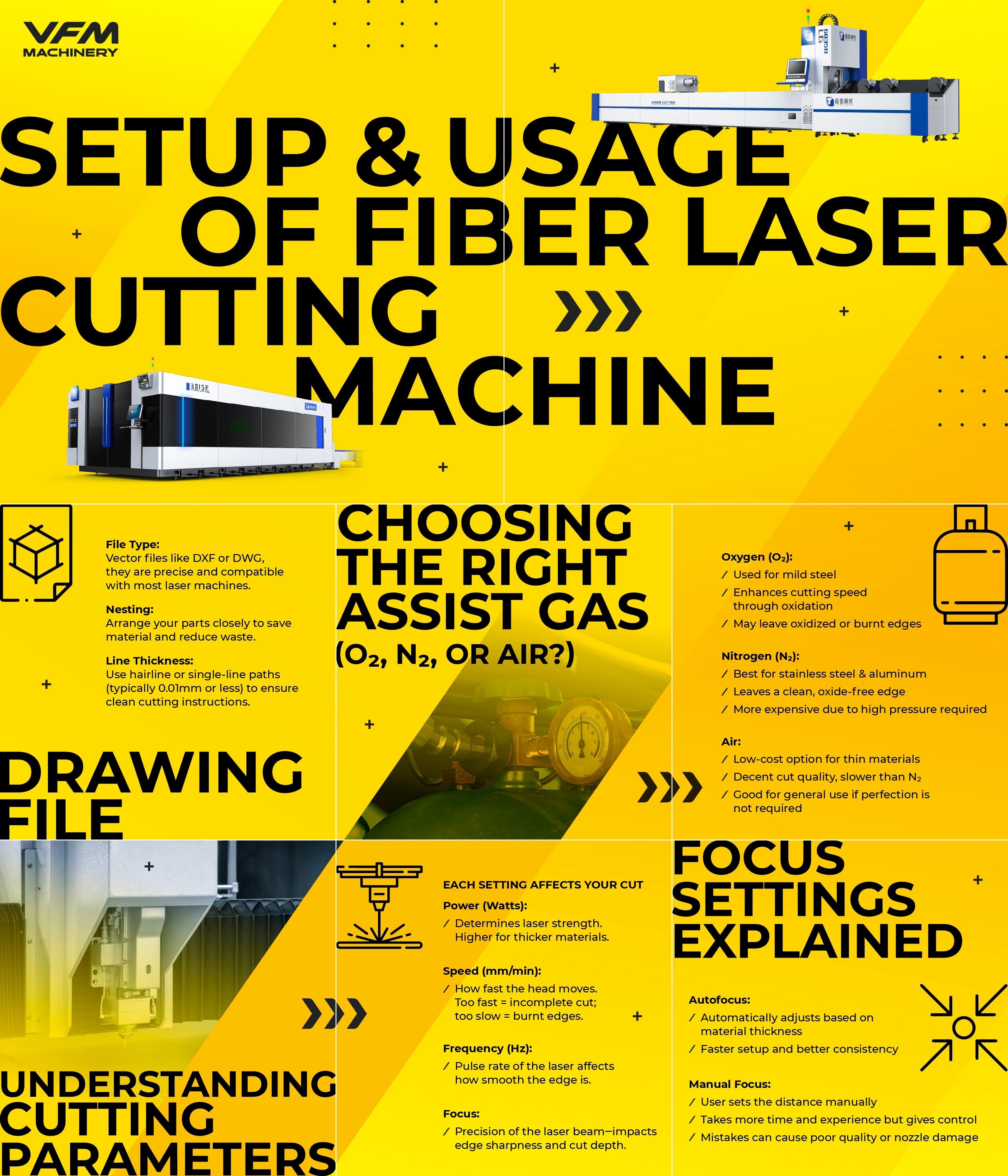
To ensure compatibility and accuracy, always use vector files such as DXF or DWG formats. These are industry-standard for laser machines and allow for clean, precise paths.
Once your file is ready:
-
Apply nesting techniques to arrange parts as closely as possible on your sheet. This reduces material waste and boosts efficiency.
-
Keep your line thickness to a minimum — ideally hairline (0.01mm or less). This tells the laser exactly where to cut without adding extra paths or confusion.
2. Choose the Right Assist Gas
Your choice of assist gas directly affects cut quality, speed, and cost. Here’s how to choose:
-
Oxygen (O₂):
Ideal for mild steel. It enhances cutting speed due to oxidation but may leave burnt or oxidized edges. -
Nitrogen (N₂):
Best for stainless steel and aluminum. It provides clean, oxide-free edges, though it operates at higher pressure and cost. -
Compressed Air:
A cost-effective option for thin materials. While slower than nitrogen, it provides decent results for general applications where ultra-clean edges aren't essential.
3. Master Your Cutting Parameters
Each material and thickness requires different machine settings. Here’s what to watch:
-
Power (Watts):
Higher power = deeper penetration. Use more power for thicker sheets. -
Speed (mm/min):
Balance is key. If too fast, you risk incomplete cuts. If too slow, edges may burn. -
Frequency (Hz):
This determines how fast the laser pulses — affecting smoothness and cut edge finish. -
Focus:
Proper beam focus is critical for a clean cut. This leads us to the next section…
4. Autofocus vs Manual Focus
-
Autofocus:
Modern machines come with autofocus systems that automatically adjust the laser head based on material thickness. This offers faster setup, fewer mistakes, and more consistent quality. -
Manual Focus:
Gives users more control, especially for specialty jobs. However, it demands experience — a mistake in setting focus distance can lead to poor cutting results or even nozzle damage.
Share:
VFM | Getting Started with Laser Cutting Machines: A Beginner’s Guide
VFM | How Auto-Focus Laser Cutting Heads Improve Your Cutting Results