In the world of modern manufacturing and fabrication, laser cutting machines have become essential tools for precision, efficiency, and versatility. Whether you're cutting metal plates or crafting intricate patterns on wood, understanding the basics of laser cutting technology opens up a world of possibilities.
🔍 What Is a Laser Cutting Machine?
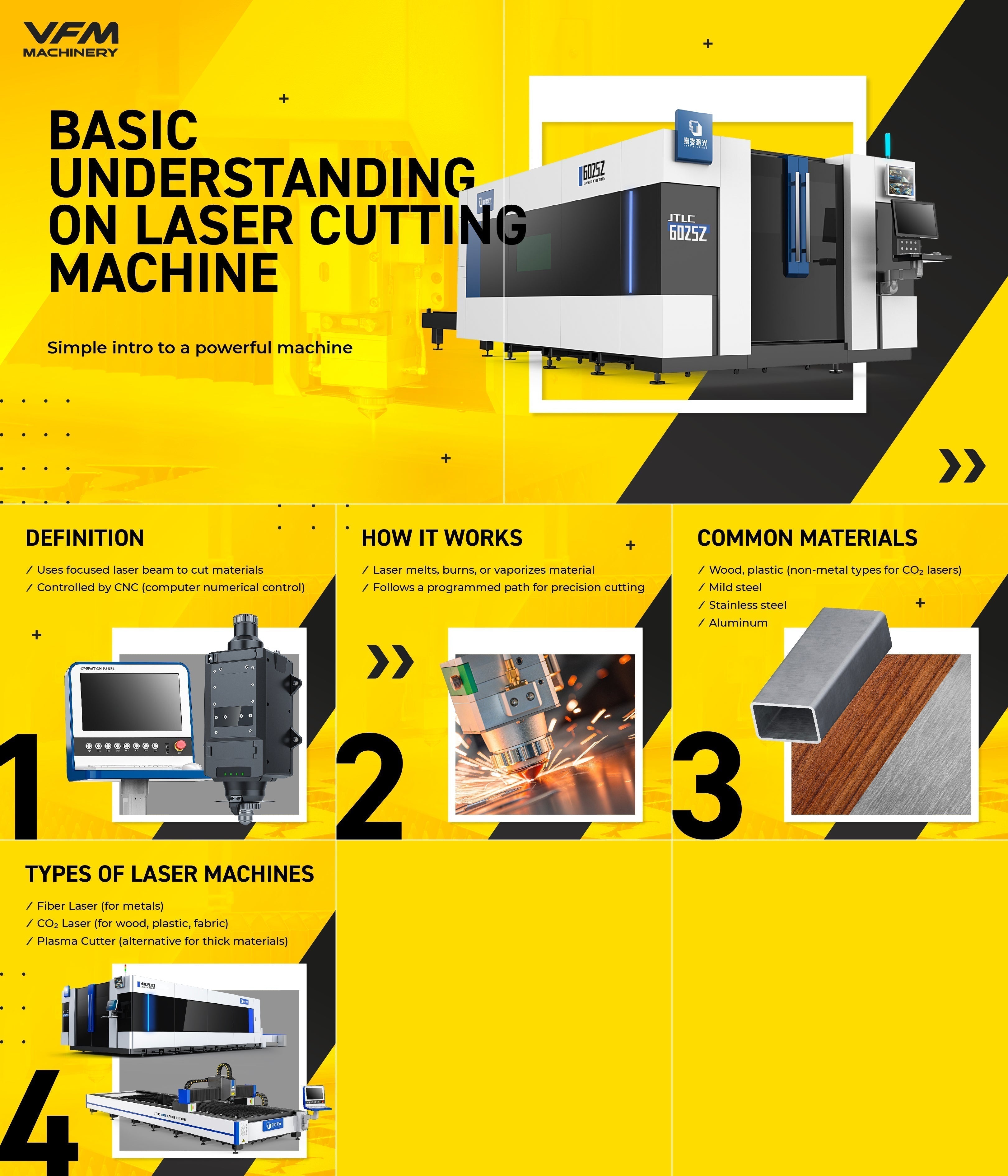
A laser cutting machine uses a focused beam of light (laser) to slice through various materials. Unlike traditional cutting methods, the laser beam is extremely precise and is controlled by a CNC system (Computer Numerical Control), allowing for automated, repeatable, and highly detailed cuts.
This advanced cutting method has become increasingly popular across industries ranging from automotive and aerospace to signage and furniture making.
⚙️ How Does Laser Cutting Work?
The principle behind laser cutting is fairly straightforward but powerful: the laser beam melts, burns, or vaporizes the material it encounters. A CNC-controlled head moves the laser along a predefined path, ensuring every cut is clean, sharp, and exactly as programmed.
Thanks to this controlled movement and the laser’s intense focus, manufacturers can achieve complex designs with minimal waste and post-processing.
🧱 What Materials Can You Cut?
Laser cutting is incredibly flexible. Depending on the type of laser used, here are some common materials that can be cut:
-
Mild Steel
-
Stainless Steel
-
Aluminum
-
Wood
-
Plastic (suitable for CO₂ lasers)
It’s important to choose the right machine and laser type for the material you’re working with to ensure safety and quality.
🛠️ Types of Laser Cutting Machines
There are several types of laser cutters available, each with its own unique strength:
-
Fiber Laser Machines: Ideal for cutting metals like stainless steel, mild steel, aluminum, and copper. Known for low maintenance and high cutting speed.
-
CO₂ Laser Machines: Best for non-metal materials such as wood, acrylic, plastic, paper, and textiles. They provide smooth, clean finishes on organic materials.
-
Plasma Cutters: Though not technically laser machines, they serve as an alternative, especially for cutting thicker metal plates. They use ionized gas instead of a laser beam.
Share:
VFM | Setup & Usage of a Fiber Laser Cutting Machine: What You Need to Know