Why Tube Laser Cutting Matters in Modern Manufacturing
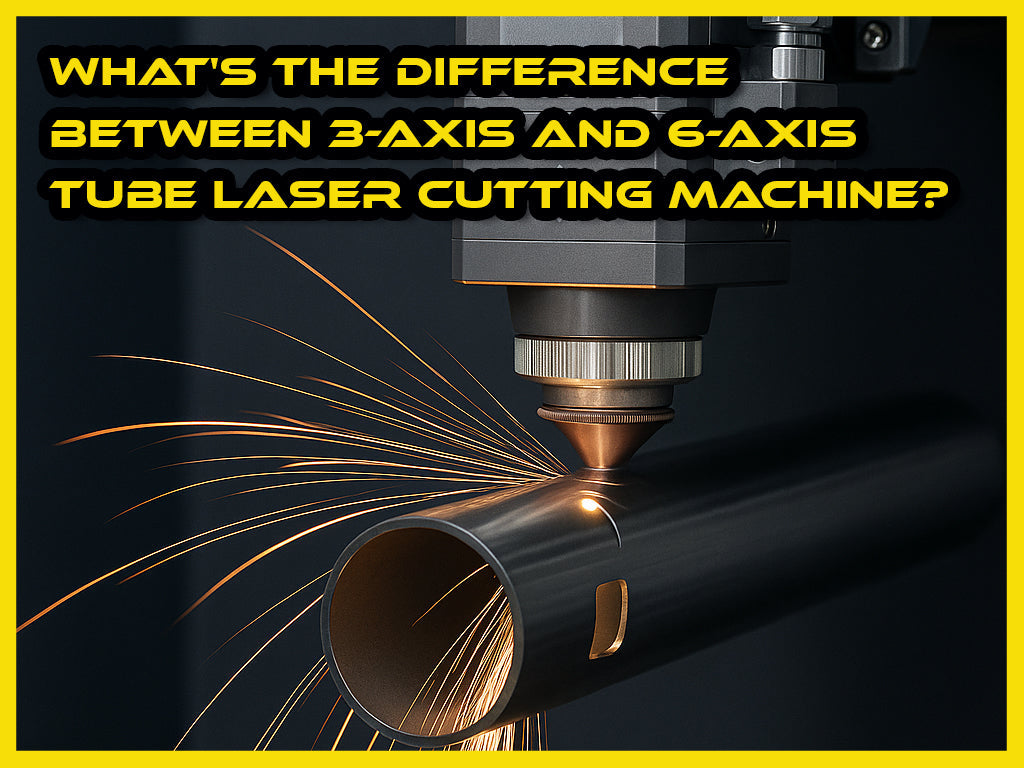
Tube laser cutting has become a go-to method in today’s manufacturing world, particularly for fabricating metal tubes with high accuracy. As industries demand more precision and efficiency, the popularity of these machines continues to grow. However, not every tube laser cutting machine performs the same. One key distinction lies in the number of axes it operates on — a factor that significantly influences the machine’s capabilities and end results.
What Are Axes in CNC and Laser Cutting?
In both CNC (Computer Numerical Control) and laser systems, an "axis" defines a direction in which the cutting head or workpiece can move. The basic movements include:
X-axis: Left to right
Y-axis: Front to back
Z-axis: Up and down
Machines with advanced configurations may also include rotational axes — typically referred to as A, B, and C — enabling tilting and rotation of either the cutting head or the tube itself.
Why More Axes Increase Cutting Capability
A higher number of axes gives the machine more freedom to maneuver. This allows for precise, angled cuts and the ability to process complex shapes with cleaner results. The more movement options available, the more advanced and efficient the cutting process becomes.
3-Axis Tube Laser Cutting: Simple and Efficient
Overview:
3-axis machines operate on linear movements only (X, Y, Z), which are ideal for cutting standard shapes and profiles straight through a tube.
Key Functions:
-
Cuts straight lines and basic contours
-
Best for simple slotting or hole features
Limitations:
-
No angle or bevel capabilities
-
Restricted to perpendicular cutting only
Typical Use Cases:
-
Mass production of furniture tubing
-
Support structures and frames
-
Automotive brackets with simple geometry
6-Axis Tube Laser Cutting: Versatile and Precise
Overview:
6-axis machines extend cutting flexibility by adding rotational and tilt movements to the standard X, Y, and Z directions. This enables cutting at angles and processing more intricate profiles.
Key Capabilities:
-
Executes bevel cuts and angled surfaces
-
Handles irregular and advanced geometries
-
Edge prep for welding done in one operation
Benefits:
-
Reduces post-processing work
-
Increases part accuracy
-
Ideal for tight-tolerance and complex projects
Common Applications:
-
Aerospace and precision parts
-
Architectural metalwork
-
Advanced automotive components
Choosing the Right Tube Laser Cutting Machine
Design Requirements:
If your design involves only straight cuts and holes, a 3-axis machine may be sufficient. For projects involving bevels, weld-ready edges, or tight-tolerance geometry, a 6-axis machine will be the better choice.
Precision Needs:
While both machines offer a high level of accuracy, 6-axis cutters deliver better consistency and finish on more complex parts, reducing the need for secondary machining.
Cost vs Capability:
3-axis machines are typically more budget-friendly, ideal for large-volume runs of simpler parts. On the other hand, 6-axis machines come with a higher price tag but offer long-term savings by reducing overall processing steps and improving output quality.
Conclusion: Match the Machine to the Job
Choose a 3-axis tube laser cutting machine when your work involves high-speed, cost-effective processing of simple designs.
Opt for a 6-axis system if your production demands precision cuts, angled edges, and reduced finishing time. The right machine depends on your project’s complexity, accuracy requirements, and budget goals.
Share:
VFM | How Auto-Focus Laser Cutting Heads Improve Your Cutting Results
VFM | 3kW or 12kW? Here’s How to Choose the Right Laser Cutting Power